
Support Specialized Causes
- Apr 18
- 2 min read
Updated: Apr 18
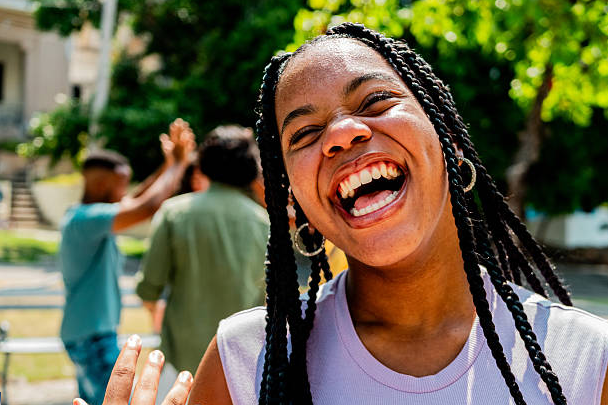
“The Mental Health Group That Refused to Be ‘For Everyone’”
A church-led social action project in a diverse London borough received funding for a “Youth Mental Health Hub.” The intention was noble: create a welcoming space for all young people. But after six months, attendance was 90% white, 80% female, and entirely English-speaking. No one from the local Somali, Caribbean, or Vietnamese communities came. The funders were confused. The youth workers were frustrated. “We put up posters everywhere,” one said. “We said everyone is welcome.”
A 22-year-old community organizer named Tasha, who had grown up in the local Caribbean Pentecostal church, was asked to “consult.” She attended one hub session and immediately saw the problem: the playlist (indie folk), the snacks (vegan kale chips), the language (“trigger warnings,” “safe space,” “emotional regulation”). Tasha told the coordinators: “You built a space for people like you. Then you called it ‘for everyone.’ That’s not inclusion. That’s a mirror.”
Instead of a general hub, Tasha proposed specialized listening circles: one for Caribbean girls, one for Somali boys, one for Vietnamese young people, and one for white allies who wanted to learn how to show up without taking over. The funders balked. “Isn’t that segregation?” Tasha replied: “Is a cardiac ward ‘segregation’ from the ER? Different bodies need different care.” The circles launched in a church basement, a community kitchen, and a hair salon. Each group designed its own rules. The Caribbean girls met over braiding sessions. The Somali boys met after Friday prayers. The Vietnamese group met at a pho shop.
After four months, the circles shared themes at a joint gathering. No one shared personal trauma. Instead, they shared patterns: “Adults don’t believe us.” “We’re told we’re too loud or too quiet.” “Mental health feels like a white person’s luxury.” The white allies circle, which had been learning about cultural humility, sat in silence for ten minutes — not performatively, but genuinely uncertain how to respond. Finally, one ally said, “What do you need from us?” The Caribbean girls answered: “Stop creating ‘for everyone’ spaces and then being surprised we don’t come.”
The hub eventually closed due to funding cuts. But three of the specialized circles continued informally, without grants or reports. Tasha now says: “Specialized causes aren’t about exclusion. They’re about precision. You can’t treat a broken arm with a band-aid for ‘all injuries.’” But she also admits: “I lost friends who thought I was dividing the community. Maybe I was. But the division was already there. I just refused to pretend it wasn’t.”
Now we want to hear from you
Discussion Prompt for The Campaign
Is there a difference between “separate but equal” and “specialized care”? How do we know which is which?
Write your comment below we love to hear from you



Comments